Forestry Mulching for Dense Brush and Woody Growth
A Different Tool for the Jobs That Need More Than Brush Mowing
When brush gets dense, woody and tangled enough that ordinary mowing stops being the right tool, forestry mulching can change the job completely.
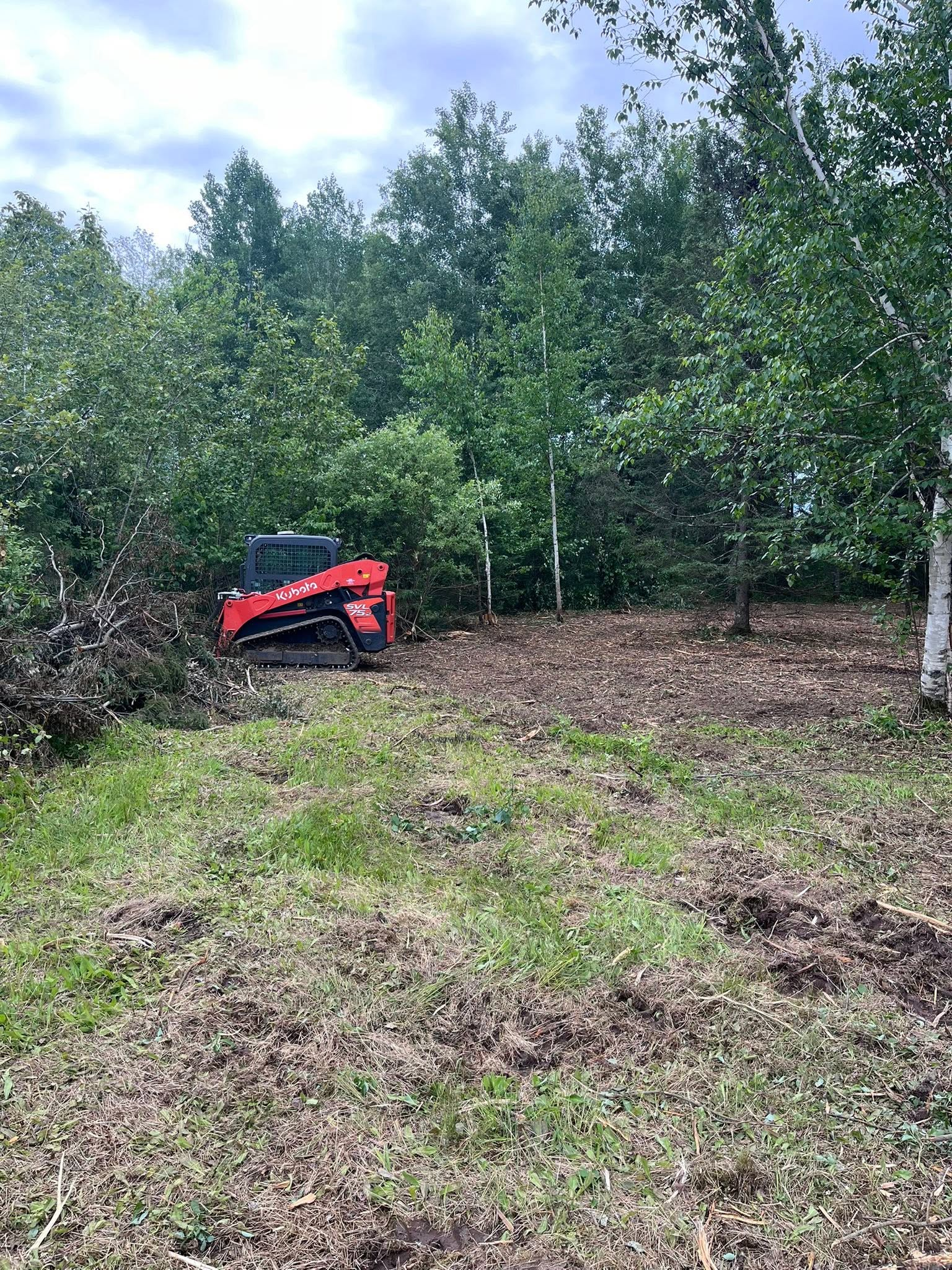
A forestry mulcher cuts and processes woody vegetation in place, reducing the amount of loose brush that has to be handled separately and leaving the area much easier to see, travel and manage.
What it can do extremely well is process dense brush, saplings and small woody growth in place, reduce loose material and open areas that are difficult to manage with ordinary mowing equipment.
First Cut Landworks offers forestry mulching when it is the right approach for the property.
What Forestry Mulching Does
A forestry mulcher uses a high-powered rotating head to cut and grind vegetation into smaller material.
Instead of cutting brush and then requiring every stem to be moved separately, the machine processes much of that material where it stands. That can reduce the amount of loose brush that needs to be piled and can create a more finished appearance through dense understory.
Typical Uses include:
- Dense brush and sapling areas
- Wooded understory management
- Trail corridors
- Property-access routes
- Selected field or woods edges
- Hunting-property improvements
- Shooting-lane vegetation
- Defensible-space fuel reduction
- Storm-damaged brush and manageable woody debris
- First-pass invasive brush reduction
The finished texture depends on vegetation, soil, rocks, moisture and how many passes the area needs.
Forestry Mulching Versus Brush Mowing
Both services cut vegetation, but the result and production style are different.
Brush mowing is excellent for heavy grass, brush, saplings and larger open areas where fast mechanical reduction is the priority. It can leave larger cut pieces behind depending on the material.
Forestry mulching processes woody material more aggressively. It is often a better choice when the site contains dense stems, tangled understory or woody growth that would leave too much loose material after mowing.
There is also overlap. Some properties are best handled with mowing in open sections and mulching in the denser woods.
I choose the method based on the job, not because I need to force one attachment onto every site.
What the Finished Ground Looks Like
Customers often picture a perfectly uniform bed of fine wood chips.
Real forestry mulching is more variable than that.
Small brush may process very finely. Larger woody stems can leave chunkier material. Rocks, old stumps, wire, metal and other hidden obstacles can limit how aggressively an area can be worked.
The finished surface may contain mulch, shredded vegetation, short cut stems and existing ground features.
The goal is a clean, usable, visibly improved area that fits what you want to do with the property next.
Can Mulching Stop Regrowth?
Not by itself.
Some woody plants can resprout from roots or stumps after the top growth is removed. Other plants can return from seed already in the soil.
That is especially important with invasive brush. Mechanical mulching can be an excellent way to knock down a dense infestation and regain access, but long-term invasive control may require follow-up management.
Forestry mulching is powerful vegetation reduction. Some species can resprout, which is why the long-term maintenance plan still matters after the first heavy pass.
Trail and Access Work
Forestry mulching works especially well along selected trail and access corridors because it can process brush while the machine moves through the route.
For a new trail, mulching can help open a corridor through thick understory and small woody growth.
For an existing trail, it can reduce overgrowth along the edges and restore visibility without requiring every cut stem to be dragged out individually.
The route still has to make sense. Wet areas, major grade problems, large stumps, boulders or drainage structures can require a different solution. Mulching opens vegetation; it is not a substitute for road building or engineered trail construction.
Hunting Property and Habitat Work
Hunting properties often benefit from selective work rather than clearing everything.
Forestry mulching can be used to open travel routes, reclaim old trails, create shooting-lane visibility, manage selected edges and make stands or habitat areas easier to reach.
The plan can preserve larger trees and cover while removing the brush that is interfering with access or the way you want to use the property.
This is where a conversation about goals matters more than an acreage number.
Defensible Space and Fuel Reduction
Forestry mulching can also be useful as part of mechanical fuel-reduction work.
Dense understory, small woody growth and selected deadfall can create continuous vegetation between wooded areas and structures. Reducing that material can help create more separation and make future maintenance easier.
For defensible-space work, mulching can reduce dense woody understory and break up continuous standing vegetation while making the area easier to access and maintain. Processed wood remains organic material, so the work should be part of an overall property-management plan.
Rocks, Wire and Hidden Obstacles Matter
Forestry mulching equipment is powerful, but it is not indestructible.
Old fencing, T-posts, cable, buried metal, large rocks, concrete pieces and other hidden debris can damage attachments and create safety hazards.
Before work begins, I need to know about anything the owner is aware of in the work area. Old rural properties can hide decades of surprises.
Areas with heavy unknown debris may require slower work or a different clearing approach.
What About Large Trees?
Forestry mulching is aimed at brush, saplings, understory and manageable woody growth. Larger standing trees can be evaluated separately when another method or contractor makes more sense.
Forestry mulching is best suited to brush, saplings, understory and small woody growth that fits the machine and site. Larger trees, hazardous trees and technical felling should be handled as tree-service work.
If a project contains a mix of brush and large timber, I can still address the brush portion without pretending the machine should do everything on the property.
What Affects the Cost of Forestry Mulching?
Density is the biggest factor.
An acre of scattered brush is not the same as an acre of tightly packed woody stems. Stem size, terrain, rocks, access, hidden debris, slopes and how selective the work must be all affect production.
The finish standard matters too. A first pass to reopen access is different from spending additional time refining edges and processing leftover material.
That is why an on-site look is more useful than a generic per-acre promise.
Frequently Asked Questions
Is forestry mulching always better than brush mowing?
No. It is better for certain kinds of vegetation and finish goals. Brush mowing can be faster and more economical in open areas. Some projects use both.
Does the mulch need to be hauled away?
Usually the point of forestry mulching is to process material on site. If the customer wants material removed, that should be discussed separately because it changes the scope.
Will the area be ready for a lawn afterward?
Not automatically. Mulching manages woody vegetation. Converting an area into finished lawn may require stump work, grading, soil conditioning, seeding and additional site preparation.
Can you mulch invasive brush?
Yes, as mechanical vegetation reduction. But invasive species can resprout or return from seed, so the site may require follow-up control.
Can mulching be done near trees I want to keep?
Often, yes. The feasibility depends on spacing, roots, rocks and machine access. Selective work is planned around the actual site.
When Forestry Mulching Is the Right Fit
If you have dense woody vegetation and want to know whether mowing, mulching, piling or a combination makes the most sense, send photos and a description of the area.
I will look at the vegetation, access and finish you want and build the job around the property—not around one attachment.
Cut Hard. Finish Clean.