New Trail Clearing Built Around How You Use the Property
A Trail Should Go Somewhere for a Reason
A new trail is not just a strip of brush cut through the woods.
It is access.
It may connect the driveway to a deer stand. It may give an ATV or UTV a practical route to the back of the property. It may make it easier to walk to a cabin, reach a field, inspect acreage, maintain a fence or get equipment into an area that has always been difficult to use.
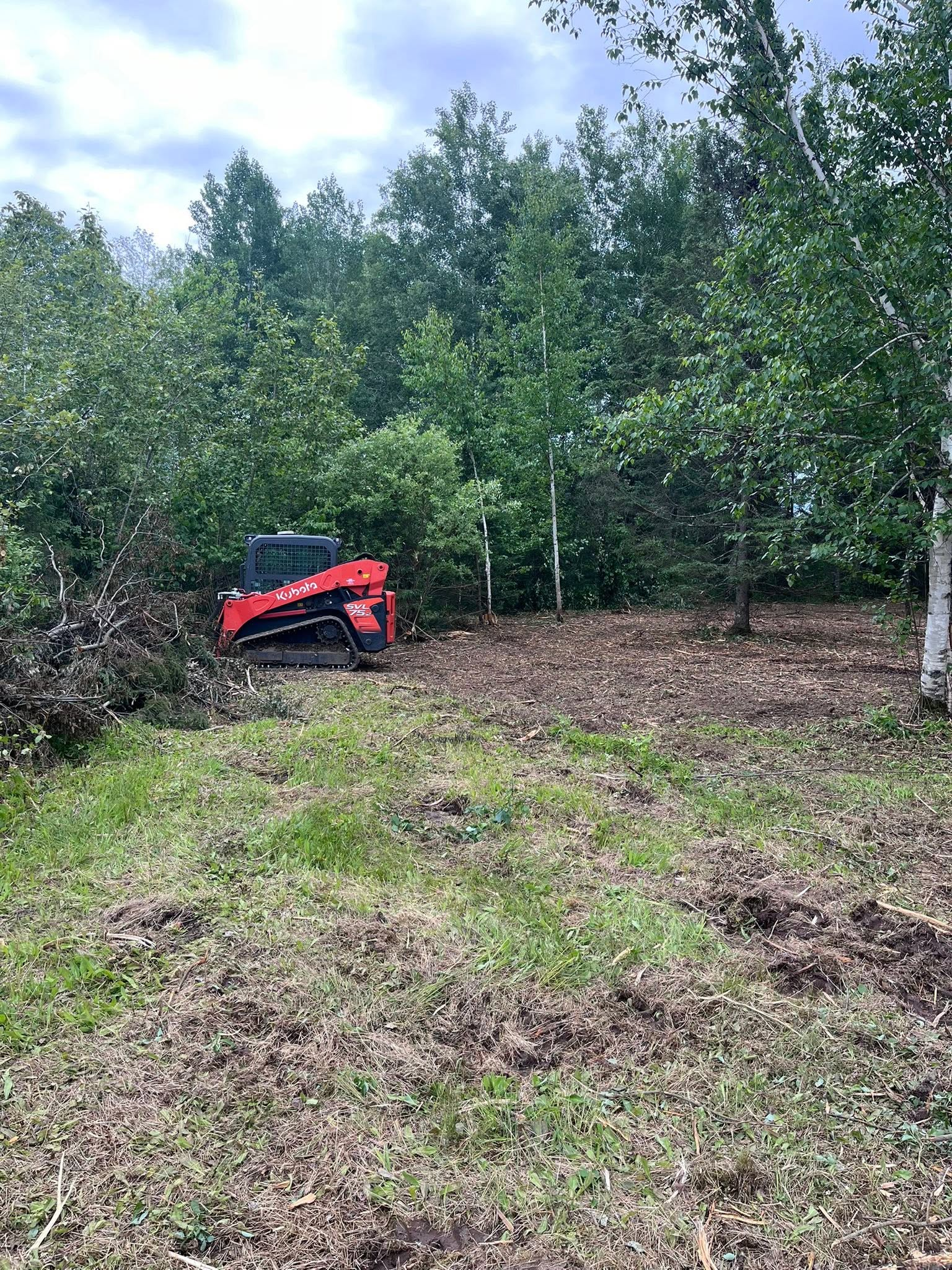
First Cut Landworks clears new trails through brush and small woody growth with skid-steer equipment.
The route, width and clearing method are built around what you need the trail to do.
Trail Width Depends on Use
There is no universal “correct” width.
A walking path can be much narrower than a route intended for a UTV, tractor, skid steer or utility trailer.
A hunting-access trail may intentionally stay tight in some areas for cover. A maintenance trail may need extra width at turns. A trail used to move equipment may need more overhead and side clearance than a recreational footpath.
The best width is the one that gives you enough room to use the trail without clearing more property than necessary.
Start with the destination
The easiest way to waste money on a trail is to start cutting before the route makes sense.
Before equipment work begins, I want to understand:
- Where you need to start
- Where you need to end
- What will travel on the trail
- How wide the route needs to be
- Which trees or features you want preserved
- Where the obvious wet spot, rocks or steep sections are
- Whether the route needs to connect to existing trails
- Whether the purpose is access, hunting, recreation or maintenance
The owner also needs to know the property boundaries. I can follow marked lines and agreed routes but trail clearing is not a substitute for a survey.
Working With the Terrain
Terrain affects where a practical trail can go.
I can work around obvious low areas, large rocks, tight tree spacing and steep sections where an alternate line makes more sense.
The First Cut portion of the job is the vegetation and access corridor. If the route also needs culverts, substantial excavation, road base or engineered water-control work, that construction can be handled as a separate scope.
My role is to clear a usable route through vegetation while making practical decisions about what the machine can safely and efficiently reach.
Brush Mowing or Forestry Mulching?
Both methods can work on new trails.
A heavy brush mower can open a corridor quickly where vegetation is mostly brush, saplings and open-grown material.
Forestry mulching can be useful where the route runs through dense woody understory or where processing the cut material in place produces a better result.
Some trails are best handled with a combination of attachments. I choose based on what is actually growing on the route.
Hunting Trails and Stand Access
New trails are especially valuable on hunting property because access affects how the entire property gets used.
A trail can create a quieter, more direct route to a stand, make it easier to move equipment, provide access for habitat work and reduce the need to walk through areas you want to leave alone.
The trail can also connect to shooting lanes, small openings or existing travel corridors.
I do not need to clear the woods wide open to make the property easier to hunt. Selective access often makes more sense.
ATV and UTV Trails
ATV and UTV trails need enough width and visibility to be practical without constantly scraping through brush.
Corners, side slopes, deadfall and edge growth all affect how the route feels once you are driving it.
New clearing can create a route sized around the machine you actually use. If you have a larger side-by-side, trailer or maintenance equipment, tell me before the route is laid out.
Reaching the Back of the Property
Sometimes the value of a trail has nothing to do with recreation.
A simple access route can make it easier to:
- Inspect storm damage
- Maintain fences
- Reach a food plot
- Move firewood
- Check a remote corner
- Get equipment to a work area
- Manage brush before it becomes a much larger project
Once access exists, the entire property becomes easier to manage.
What Happens to the Cut Material?
That depends on the clearing method.
Material may be mowed, mulched, grappled and piled, or handled with a combination of methods.
A mulched trail can have much of the woody material processed on the route. A mowed trail may leave larger pieces that need to be pushed aside or piled depending on the finish you want.
I will explain the expected result before the job so there is no surprise about what “cleared” means.
New Trails Still Need Maintenance
Any trail through living vegetation will eventually need maintenance.
Edge brush grows back. Saplings establish. Branches fall. Storms change the route.
The advantage of a properly opened trail is that follow-up maintenance is far easier than the original clearing.
For many properties, a periodic maintenance pass keeps a trail functional without ever letting it return to the condition that required heavy first-time clearing.
What Affects Trail-Clearing Cost?
Length matters, but density matters just as much.
A long trail through light brush may be easier than a short trail through tangles woody growth.
Important factors include:
- Trail length and width
- Vegetation density and stem size
- Rocks, stumps, and hidden debris
- Wet or soft ground
- Slope
- Number of tight turns
- Selective clearing around trees
- Equipment access to the starting point
- Material-handling expectations
That is why I do not pretend a trail can be priced accurately from length alone.
Frequently Asked Questions
Can you make a trail to my deer stand?
Yes. Hunting access is one of the most common reasons to open a new route.
Can you clear a trail wide enough for a side-by-side?
Yes, when the terrain and tree spacing allow it. Tell me the width of the equipment you plan to use.
Do you build gravel roads?
The core service is vegetation clearing for trails and access routes. If a project also needs road base, culverts or major drainage construction, that portion should be scoped separately.
Can you route the trail around wet areas?
I can make practical route adjustments around obvious wet or difficult sections when the property allows it. Significant drainage or earthwork should be handled as a separate construction project.
Do I need to mark the property line?
If the trail is near a boundary or there is any uncertainty, yes. The owner is responsible for identifying and marking property boundaries.
Open the Route You Actually Need
If you have a start point, an end point and a reason for the trail, send the details.
A rough map, aerial screenshot or marked photo can help before the site visit.
From there, I can look at the route and tell you what kind of clearing makes sense.
Cut Hard. Finish Clean.