Bring an Overgrown Trail Back to Life
Most Old Trails Are Not Gone — They Are Buried Under Growth
A trail can disappear surprisingly fast.
First the edges start to move inward. Then saplings establish in the travel lane. Low branches hang into the route. Deadfall creates detours. Corners get tighter. The path that used to be easy on an ATV becomes something you avoid because every trip turns into a fight with brush.
If the original route is still there, restoration is often more efficient than cutting a completely new trail.
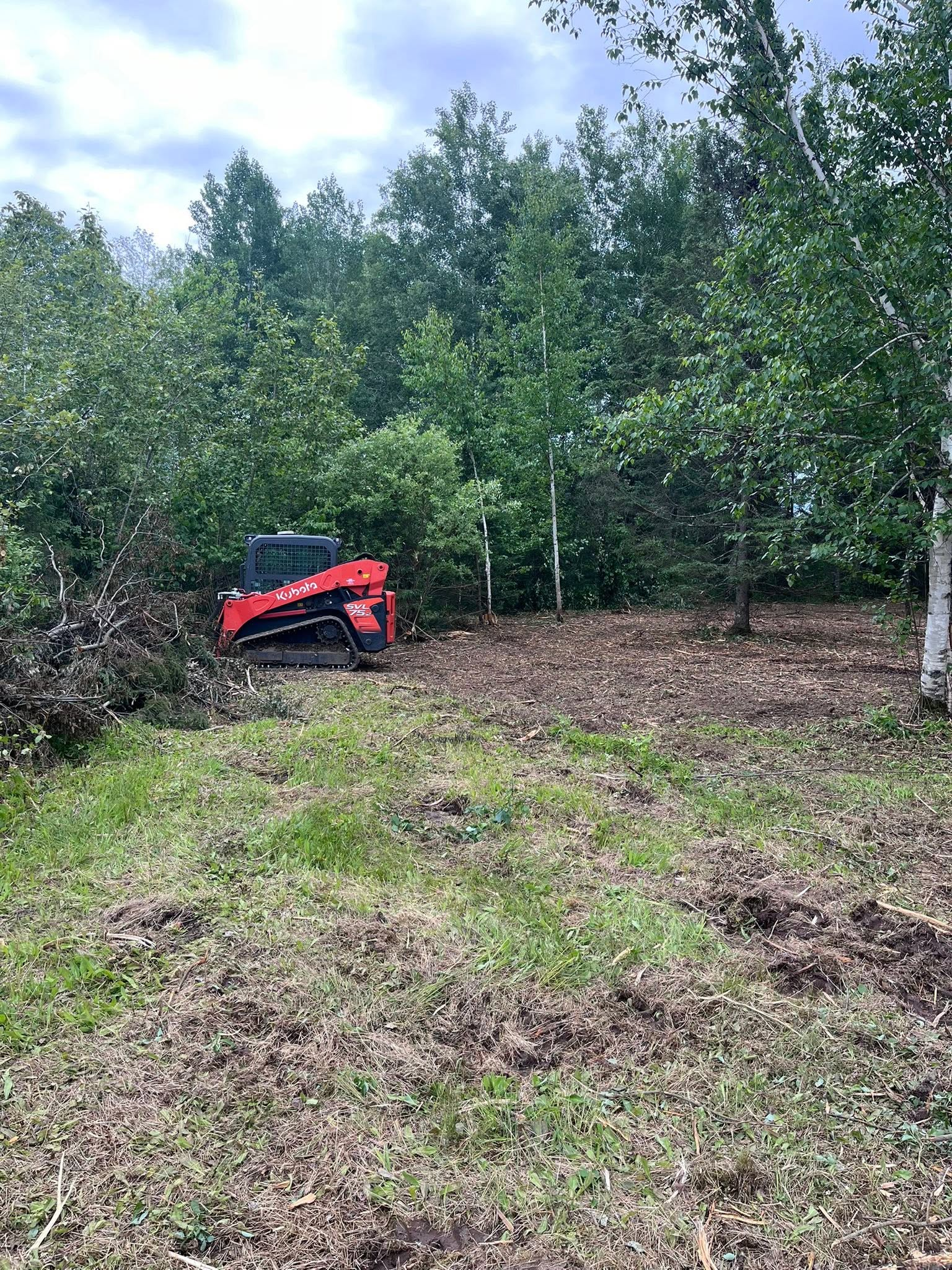
First Cut Landworks reopens and widens established trails by removing encroaching vegetation, small woody growth and manageable debris.
Restoration Versus New Trail Clearing
A restoration project starts with a route that already exists.
That is important because the travel corridor, destination and basic path have already been established. The job is usually about reclaiming width, visibility and access.
New trail clearing starts where there is no usable route and requires more decisions about alignment.
If your old trail still goes where you want to go, keeping it can save unnecessary clearing.
What Trail restoration can include
Depending on the site, restoration may include:
- Mowing heavy brush in the trail
- Cutting saplings and woody edge growth
- Widening narrow sections
- Opening corners
- Removing low vegetation that blocks sight lines
- Clearing manageable deadfall
- Reclaiming access to stands, fields or remote property areas
- Reconnecting trail sections that have grown shut
- Clearing around gates or trail extrances
- Reducing vegetation around intersections
- Mulching dense woody sections where that method fits better
The project can focus on the entire trail system or the specific sections that have become unstable.
Widening for the Equipment You Use
A trail that worked for a four-wheeler may feel completely different once you own a larger side-by-side or need to move a trailer through it.
Widening can improve side clearance and make turns more practical.
I do not force every trail to the same dimension. The useful width depends on the machine, the terrain and how much vegetation can be removed without turning the route into a much larger clearing project.
Bring the dimensions of the widest equipment you expect to use. That gives us a real target.
Hunting Trail Restoration
Hunting trails often benefit from careful restoration rather than aggressive clearing.
You may want quiet access to a stand without opening the surrounding cover. You may need a route widened just enough for equipment. You may want to reopen a connector between existing trails while leaving nearby bedding or screening cover intact.
I can work selectively so the access problem gets solved without treating the entire woods like a field.
Shooting-lane clearing and small habitat-access improvements can also be combined with trail work when they are part of the same project.
Forestry Mulching on Existing Trails
Forestry mulching can be useful when trail edges contain dense woody growth that would leave a lot of loose material after ordinary mowing.
The mulcher can process brush and small woody stems in place and help create a cleaner corridor.
It is not required on every trail. If the growth is lighter, a brush mower may be more efficient.
The site dictates the attachment.
What About Ruts and Drainage?
Trail restoration is primarily vegetation and access work.
I pay attention to obvious wet spots, low areas and access problems during the walkthrough so the clearing plan works with the route you already have. Major drainage reconstruction is a separate type of work.
If a trail has severe erosion, major washouts, collapsed culverts or needs substantial grading and water-control structures, that is beyond basic vegetation restoration and should be scoped separately.
It is better to draw that line clearly than claim every trail problem can be solved by the same machine.
Storm Damage on Trails
A storm can turn an open route into a blocked route overnight.
Branches, tops and small trees may fall across the trail, and the surrounding brush often makes cleanup harder.
When the debris fits my equipment and normal scope, trail restoration can include clearing and consolidating storm material so the route is usable again.
Trail restoration focuses on brush, saplings, encroaching growth, manageable deadfall and usable width. Hazardous standing trees can be referred to a tree contractor when needed.
Trail Maintenance Is Cheaper Than Starting Over
Once a trail has been reopened, periodic maintenance can keep it from disappearing again.
The exact interval depends on vegetation and use. Fast-growing brush may need attention sooner than a shaded trail with little understory.
The important point is simple: do not wait until you lose the route.
A maintenance pass on an established corridor is usually a much smaller project than reclaiming years of growth.
What affects the cost?
Important factors include:
- Total trail length
- Target Width
- Density and size of encroaching vegetation
- Deadfall
- Number of turns and tight sections
- Rocks and hidden obstacles
- Terrain and ground conditions
- How selective the work must be
- Whether mowing, mulching or grapple work is needed
A trail that is technically "one mile long" tells me very little until I can see how much of that mile is open and how much is buried.
Frequently Asked Questions
Can you restore a trail that has not been used in years?
Often, yes, if the original corridor can still be identified and the terrain is accessible to the machine.
Can you widen only part of the trail?
Yes. Many projects focus on tight corners, narrow sections, entrances and areas that have grown in faster than the rest.
Will you remove every stump?
Not as part of normal trail vegetation clearing. Stump grinding may be added in selected areas when it makes sense, but complete stump removal is not automatically included.
Can you clear branches overhead?
Low brush and reachable vegetation can be addressed as part of the project. Large limbs or hazardous tree work may require a tree service.
Do you guarantee the trail will never grow in again?
No. Vegetation continues to grow. The purpose of restoration is to reclaim the corridor and make future maintenance easier.
Stop Fighting the Same Overgrown Trail
If you already know where the trail is supposed to be, there is no reason to keep driving around the brush or abandoning sections one by one.
Send photos, a rough trail map and an estimate of total length.
I can walk the route with you and build a restoration plan around the sections that actually need work.
Cut Hard. Finish Clean.